
Evidence-Based Research
Regional diagnosis, surveys and policy analysis built on documented methods and verifiable sources.
A proposed institutional platform for leadership development, political strategy, public affairs, evidence-based research and accountable governance in Nepal.
Regional diagnosis, surveys and policy analysis built on documented methods and verifiable sources.
Training the people who will run campaigns, municipalities and public institutions — ethically and competently.
Tracking what was promised against what was budgeted, built and delivered — long after election day.

“Independent candidate होइन — Independent Evaluation.”
Nepal should not judge leadership by party, popularity, speeches or election-time promises alone. NLPAI is being built to give citizens a systematic way to understand what a region needs, what a candidate can actually do — and whether commitments are kept.
An independent research and evaluation institute — and a clearly separated Political Strategy Office that serves clients. Shared support covers administration, finance, legal & compliance, data, communications and M&E.
Training, mentoring and leadership development.
Independent function 02Campaign advisory, planning and execution.
Client service unit 03Regional studies, surveys and candidate assessment.
Independent function 04Public policy, institutions and governance reform.
Independent function 05District and municipal development diagnostics.
Independent function 06Public engagement, stakeholder relations and institutional communications.
Independent functionEvery publication states its research date, methods, limitations, sources and any funding or commissioning relationship.

Short, evidence-based papers addressing specific policy challenges and potential solutions.

District and municipal profiles covering development needs, local assets, services and priorities.
Reviews of commitments, service delivery, institutional performance and publicly available data.
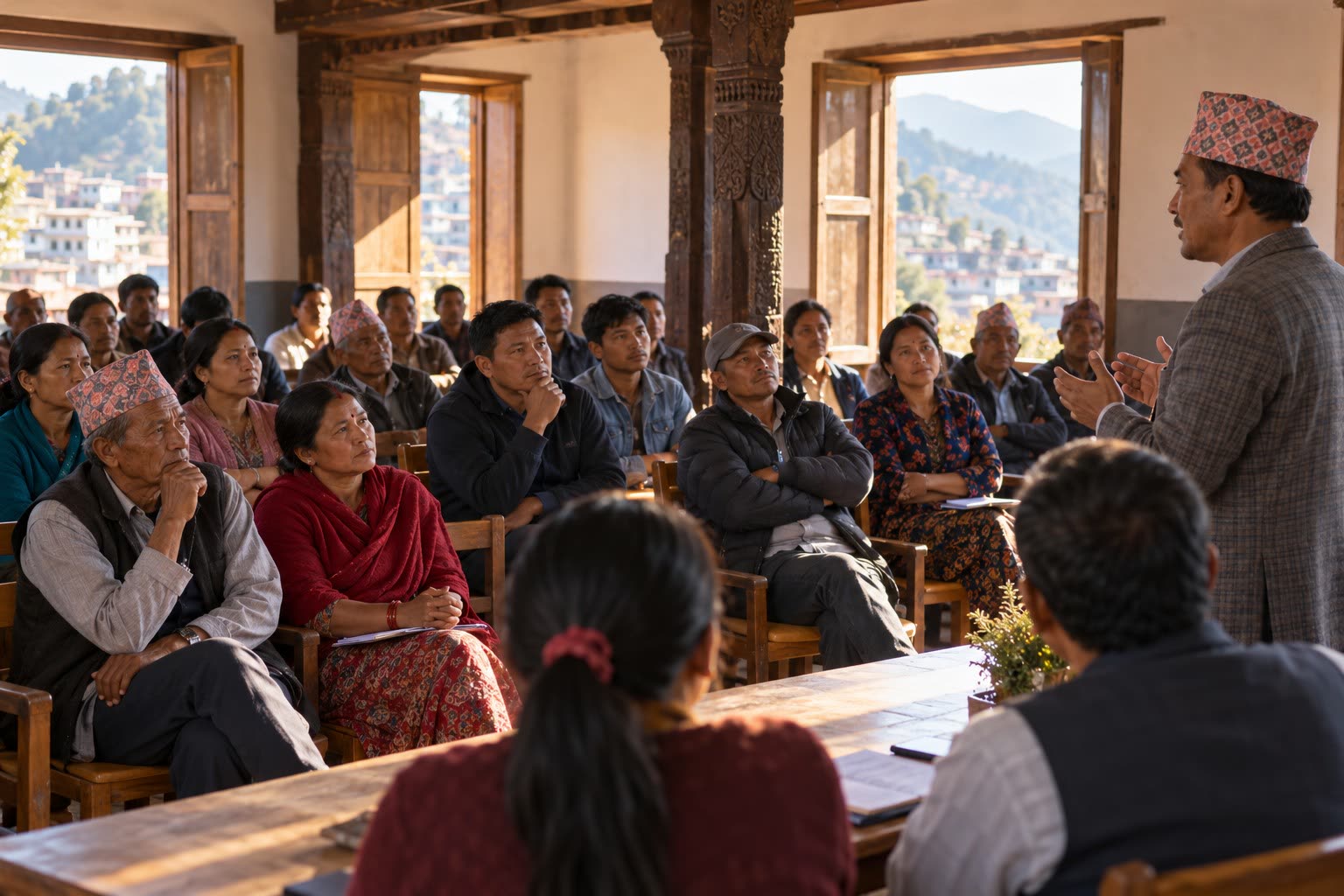
Structured candidate profiles and evidence-based assessments using published standards and consistent methods.
Seven dimensions, published criteria and a confidence rating for every finding. A score is an analytical judgement — transparent, reviewable and open to correction.
A public performance monitoring system that separates an announcement from an implemented project, and expenditure from a verified outcome.
See the dashboard modelEight dimensions produce a Regional Development & Leadership Assessment for each area — urgent problems, root causes, assets, priorities, and the capabilities a representative will need.

Collect regional data, public concerns and available institutional information.
Apply the 7C framework, policy analysis and documented research methods.
Prepare assessments, development priorities, leadership recommendations and strategy options.
Deliver agreed training, research projects, advisory work or campaign services.
Track commitments, project milestones, campaign activities and outcomes.
Share appropriate findings, correct errors and refine the methodology.
Research collaborations, programme partnerships, academy enrolment and advisory enquiries.